CAD Work
This page presents a selection of my CAD work, highlighting both final renders and the development of complex forms. Featured projects include the design of sunglasses and a Formula 1–inspired racing car. These projects demonstrate my ability to utilise a range of CAD tools, integrating free-form surface modelling with precise, parametric design techniques.
Both projects were driven by a high degree of creative freedom, allowing for exploration and refinement throughout the design process. Final visual outputs were produced using a combination of inbuilt CAD rendering tools and Adobe Photoshop, resulting in high-quality presentation imagery and design posters.

Racecar Design
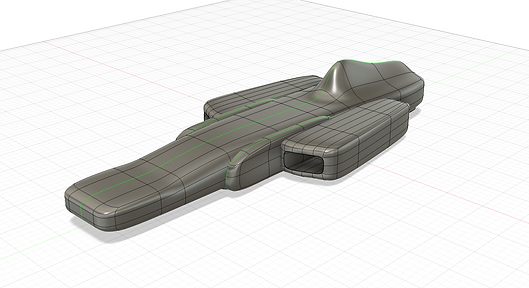
I was tasked with modelling an object of my choice in CAD to develop my skills in Fusion 360. To challenge myself, I chose to model a Formula 1–style car based on a reference sketch sourced online. I found the project highly engaging, and while it proved challenging, I was ultimately very pleased with the outcome.
The process involved significant trial and error, particularly through the use of freeform modelling tools, which were new to me at the time. Replicating the complex curves and surfaces of the vehicle required careful iteration, beginning with the primary body form and progressively refining the overall geometry.


There was a significant amount of development involved in creating this design, from shaping the main body of the vehicle to refining the wings, spoiler, side pods, and wheels. Throughout the process, I gained a much deeper understanding of freeform tools and different modelling techniques within Fusion 360.
The project proved challenging at times, particularly when developing the cockpit. Hollowing out the form created complications within the freeform body, requiring multiple adjustments and refinements to maintain the overall shape and flow of the design. These challenges ultimately improved both my problem-solving skills and my understanding of complex surface modelling.
One of the most enjoyable aspects of the process was sculpting the wings and side pods, as these elements helped bring the vehicle to life and established a stronger sense of speed, aerodynamics, and character within the final form. The project as a whole allowed me to further develop my technical modelling abilities while also exploring a more expressive and dynamic design language.


Below are some of the renders done during the project. Shwocasing the car with its decal and some textures like carbon fibre.


Sunglasses Design

This was another design task where we were asked to create a pair of sunglasses of our choice. I chose to create aviator-style sunglasses because I find those frames the most aesthetically pleasing. The outcome was relatively simple, but I learned a lot of skills during the process that I carried on using through my studies.
The process started with making the lenses and using them as a basis to work around. In this project, I learned a lot about faces and specific tools within Fusion 360 that allow you to draw faces and surfaces.


The aim of the sunglasses design was to achieve a high level of accuracy in relation to manufacturing specifications and tolerances. The images above showcase both the cross-section of the design, ensuring there is no overlap between components, as well as the hinge mechanism and bolts used to secure the assembly.
This project provided valuable insight into the importance of precision within the design process, particularly when creating products intended for manufacturing and assembly. It strengthened my understanding of tolerancing and highlighted the specific tools and techniques required to ensure a design meets functional and production requirements.
Through developing the hinge mechanism and refining the fit between components, I gained a greater appreciation for detail-oriented modelling and the relationship between digital design decisions and real-world manufacturability. The project ultimately helped improve both my technical CAD skills and my ability to design with production constraints in mind.
Below are some renders of the final design.


